

How to read ZTRS scores and verify who you're talking to
Video: Understanding Contact Trust Replace this with YouTube embed when video is ready.
Viewing a Contact Profile
How to access:
- Open a conversation with the contact
- Tap their name at the top of the chat
- View their full profile
Or:
- Go to your Contacts list
- Tap any contact's name
- View their profile
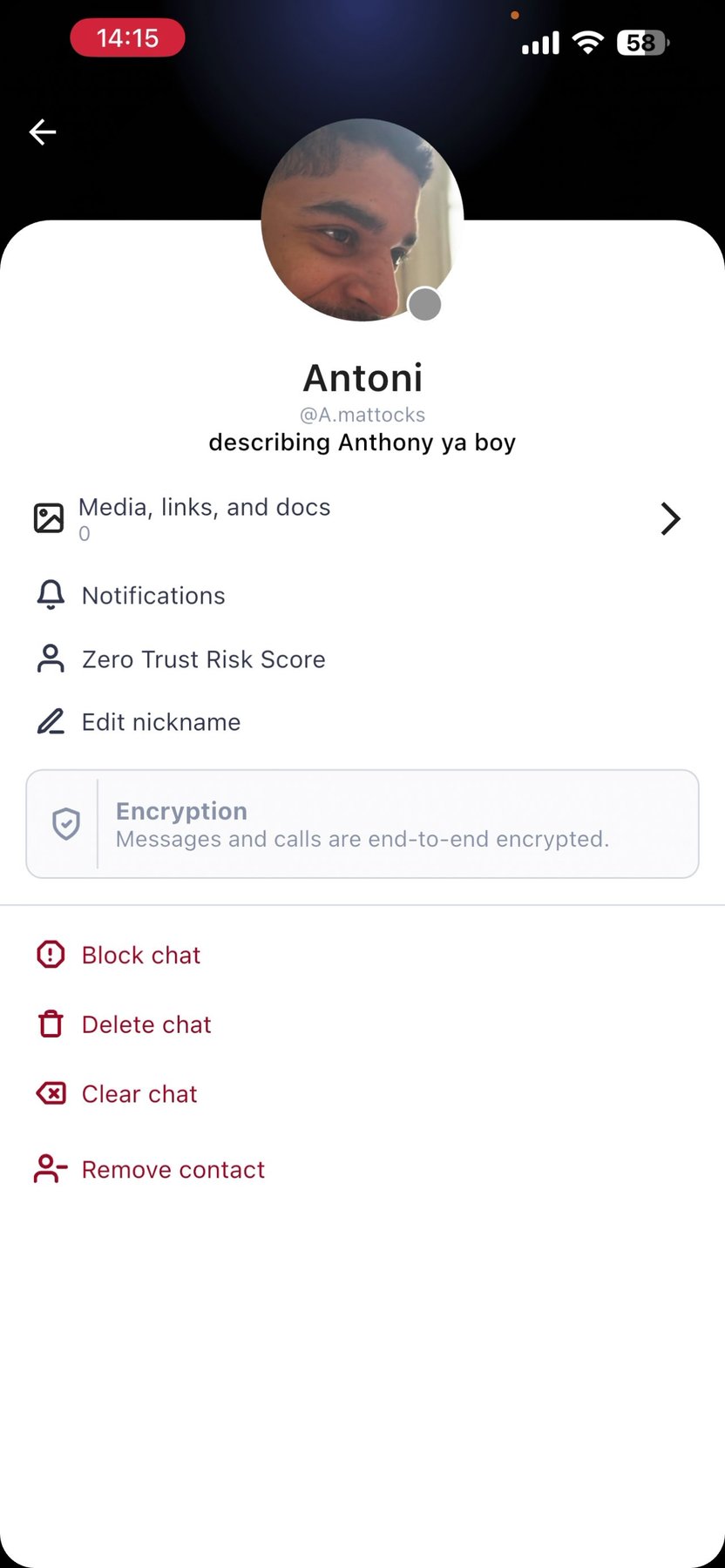
Profile Information
Each contact profile displays:
Username
Their unique Tr3sPass identifier
Profile Photo
Their chosen profile image (if set)
Security Zone
Which zone they're communicating from:
- Anonymous Zone
- Verified Zone
- Secure Zone
ZTRS Score
Their Zero Trust Risk Score (explained below)
Verification Status
What level of identity verification they've completed
Understanding Zero Trust Risk Score (ZTRS)
Your Zero Trust Risk Score is a real-time assessment of digital identity and trustworthiness — similar to a credit score, but for verifying who you're communicating with online.
What ZTRS Measures
ZTRS validates your entire digital profile across the TripleEnable ecosystem, including:
- Email addresses (verified and validated)
- Phone numbers (confirmed ownership)
- Social media accounts (Facebook, LinkedIn, and other platforms)
- Domain ownership (for business users)
- All other digital assets added to TripleEnable
How ZTRS is Calculated
Your ZTRS is evaluated continuously and recalculated monthly using TripleCyber's proprietary AI engine that assesses:
Location Patterns
Monitors geographic access points and detects anomalies. Consistent location patterns increase trust; unusual access attempts may lower scores.
Validation History
Analyzes authentication trends and consistency. Regular, successful validations build trust over time.
Security Factors
Evaluates encryption status, asset age, and dark web exposure. Older, verified assets with no breach history score higher.
Device Security and Digital Behavior
Analyzes patterns to provide real-time trust ratings. Consistent device usage and normal behavior patterns indicate trustworthiness.
Advanced Security Checks
The ZTRS system performs comprehensive security checks including:
- Phishing and spoofing detection
- Domain reputation monitoring
- Breach exposure analysis
- SIM-swap detection for phone numbers
- DKIM/DMARC validation for email security
Reading ZTRS in Contact Profiles
When viewing a contact's ZTRS, you'll see:
Overall Score
A confidence rating indicating overall trustworthiness
Zone Level
Their current security zone (Anonymous, Verified, or Secure)
Contributing Factors
Granular breakdown of what contributes to their score — not just a yes/no "secure" label
Trust Signals
Live indicators of identity confidence displayed next to the contact
What the Zones Tell You
Anonymous Zone Contacts
- No identity verification completed
- Cannot view their ZTRS (they're anonymous by design)
- Use caution with sensitive information
- Appropriate for casual, non-sensitive conversations
Verified Zone Contacts
- 2FA authentication completed
- Basic identity confirmation
- Moderate trust level
- Good for professional networking and general communication
Secure Zone Contacts
- Government ID verified
- Face recognition completed
- Phone and email confirmed
- Highest trust level
- Appropriate for sensitive business and financial discussions
One-Click Validation
Validate any contact instantly to see their current verification status.
How to validate:
- Open the contact's profile
- Tap "Validate"
- View their ZTRS breakdown immediately
What you see:
- Current zone and verification level
- ZTRS score with contributing factors
- Any flags or concerns
- Verification timestamps
Sending Validation Requests
For additional confirmation, you can request that a contact verify specific information.
How it works:
- Open the contact's profile
- Tap "Request Validation"
- They receive a notification in TripleEnable
- They approve or decline within 24 hours
- You receive confirmation of their response
Use cases:
- Confirming a new business contact's identity
- Verifying someone before sharing sensitive information
- Double-checking a contact who seems unusual
Building Your Own ZTRS
To maximize your own trust score:
- Create a Secure Zone account — Government ID verification provides the highest base score
- Verify your digital assets — Add and verify email addresses, phone numbers, and social accounts in TripleEnable
- Maintain consistent behavior — Regular usage patterns and consistent device access build trust
- Keep assets current — Ensure verified information stays accurate and up-to-date
- Protect your accounts — Use strong passwords and enable all available security features
Next Steps
Now that you understand profiles and ZTRS:
- 3.6 - Messaging Features: Learn about voice calls, video calls, and groups
- 4.1 - What is TripleValidate: Deep dive into identity verification
- 2.3 - Managing Assets: Add digital assets to increase your ZTRS