
Phishing attacks are becoming one of the most dangerous cybersecurity risks for both individuals and organizations. Fake emails, daunting phone calls, or even realistic deepfakes, phishing attackers constantly evolve and adapt to trap victims.
This isn't just a technical problem; it's a human one, playing on trust, fear, and urgency. That's why understanding these threats is essential to secure your everything on the internet.
How to Recognize, Prevent, and Respond to Phishing Attacks
In this comprehensive article, we'll pull back the curtain on the world of phishing. We'll start by detailing precisely what these attacks are and how their insidious mechanisms work. Then, we'll take a fascinating, and perhaps frightening, journey through how these attacks have evolved over time, from early, rudimentary scams to the sophisticated, AI-driven threats we see today.
What are Phishing Attacks?
A phishing attack is a sneaky form of cybercrime where attackers impersonate someone you trust. This could be your bank, a government agency, a well-known company, or even a friend. Their goal is always the same: to trick you into revealing sensitive information. We're talking about things like your passwords, banking details, credit card numbers, or other personal data that can be used for identity theft or financial fraud.
These aren't just limited to fake emails anymore. Phishing attacks come in many guises, constantly evolving to bypass your defenses:
- Deceptive emails - the most common, often designed to look legitimate with convincing logos and sender names. These emails might urge you to "verify your account" or "update your information."
- Malicious text messages (smishing) - perhaps claiming to be from your bank about a suspicious transaction, or a package delivery service with a link to track a fake shipment.
- Phone calls (vishing) - pretending to be from tech support, the IRS, or even a law enforcement agency. They create a sense of urgency to get you to act without thinking.
- Fake websites - that look identical to a legitimate one. When you enter your login credentials on such a site, the attackers instantly have your information.
The key to all phishing attacks is deception. They play on your trust and urgency, hoping you'll make a mistake and give them exactly what they want.
How Have Phishing Attacks Evolved?
Early forms of phishing attacks can actually be traced back to the 1800s to the Spanish Prisoner Scam. In this scam a con artist would contact a victim claiming they were attempting to smuggle a wealthy Spanish prisoner out of prison. The con artist would ask for money to bribe the prison guards in exchange for a handsome reward upon the prisoner's escape, but of course, no money was ever received.
The modern attack, or ones that take place primarily over the internet, have only grown more sophisticated since the 1990s:
- They began with basic fake emails, ones that most could recognize today
- Spear-phishing and whaling began to target specific individuals and high-ranking executives, tailoring their messages to be more effective
- Cross-platform phishing spread to social media and mobile devices, expanding who could be targeted in attacks
- Most recently, AI-driven phishing attacks have begun crafting emails and messages with limited errors, occasionally these attacks even use deepfakes
Types of Phishing Attacks
Spear phishing refers to phishing attacks that go after a single victim. This victim can be a lone individual, or an entire organization or business. Spear phishing usually involves personal information about the victim, whether it be public information or private, to lure the victim.
Oftentimes, spear phishing attackers pose as someone with authority, as victims are more willing to assist. When these authority figures are top executives or celebrities, these spear phishing attacks are referred to as "whaling". In whaling attacks, the attackers often conduct smaller spear phishing attacks in the same organization to eventually reach the "whale".
In 2016, one of these spear phishing attacks had real-life consequences when a hacker posed as Snapchat CEO Evan Spiegel. The hacker emailed a payroll employee, posing as Spiegel, and requested information on a number of employees and ex-employees. Once the hacker had the information, they published it, and many employees had their identities compromised.
How to Recognize a Phishing Attack
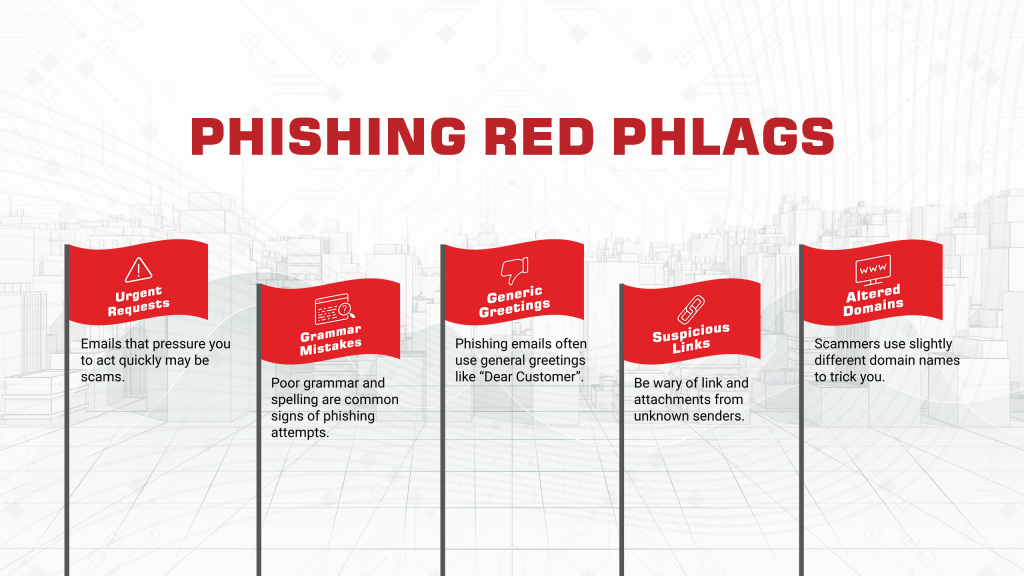
Being able to recognize a phishing attempt allows individuals to report it and not fall victim to it. Look for these warning signs:
- Urgent or threatening language
- Requests for personal information
- Suspicious sender addresses
- Poor grammar or spelling
- Mismatched links (hover to verify)
- Unexpected attachments
How to Prevent Phishing Attacks

Implementing a multi-layered defense is essential to eliminate phishing attacks before they can reach a device:
- Endpoint security - protect all devices accessing your network
- Email filtering - catch suspicious messages before they reach inboxes
- Software updates - keep browsers and applications current
- Multi-factor authentication - require additional verification
- Monitoring - track and report phishing activity
No single defense strategy is really secure. A real-world case study proved a financial company with a multi-layered defense strategy, including email filtering, user reporting, and endpoint protection, prevented 1,799 out of 1,800 phishing emails from causing significant damage.
With solutions like TripleEnable and Tr3sPass, which are built with modern layered defense strategies, advanced endpoint protection, secure messaging, and rigorous authentication protocols are the standard, not the extraordinary.
Phishing attacks aren't going anywhere—in fact, they're only getting smarter. But staying informed, implementing layered security strategies, and adopting powerful tools like TripleEnable and Tr3sPass, phishing attacks are stopped before they have an opportunity to cause harm.
Ready to protect your organization from phishing?
Learn about TripleEnable | Download Tr3sPass
Stay vigilant. Stay protected. Stay one step ahead.


