
What is Lateral Movement?
Lateral movement is a stealthy technique cyber attackers use after they have gained access to a network. Instead of targeting high-value data immediately, attackers move from one system to another, imitating legitimate users to play a persona that is sneaky. They spread silently across endpoints, servers, and cloud environments, making detection difficult for a regular person.
Think of it like a burglar breaking into a hotel, entering within the lobby, but leaving the lobby to go room-to-room unnoticed. One room leads to another, and by the time anyone notices, the entire floor is compromised. This is how lateral movement works: stealthy, persistent, and dangerous.
The 3 Critical Phases of Lateral Movement
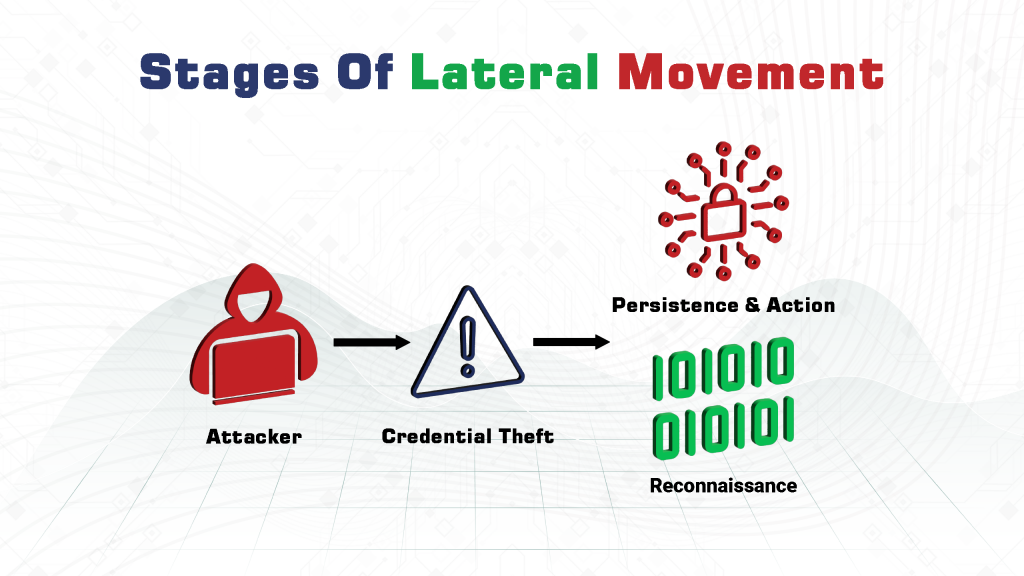
Lateral movement typically follows three phases:
- Initial Access - Attackers gain entry through phishing, compromised credentials, or vulnerabilities
- Reconnaissance - They explore the network to identify valuable targets and pathways
- Expansion - They move laterally across systems, escalating privileges along the way
Why Lateral Movement is So Dangerous
Lateral movement is what turns a small intrusion into a full cybersecurity breach. It is especially dangerous because attackers blend into regular network activity, exploring and exploiting systems without being detected.
This technique plays a role in almost every major cybersecurity event, including ransomware attacks and state-sponsored intrusions. It's not just about access—it's about reach. One device can lead to dozens more if lateral movement goes unnoticed and cause a negative domino effect.
How Zero Trust Stops Lateral Movement
Zero Trust Security Architecture is designed to prevent lateral movement. Instead of trusting anything inside the network by default, Zero Trust requires all users, devices, and actions to prove their legitimacy continuously to ensure all traffic is safe and welcomed.
Core Zero Trust Principles That Block Lateral Movement
Never Trust, Always Verify
No device or login is inherently trusted. All access requires verification—every time.
Micro-Segmentation
The network is divided into isolated zones. Breaching one doesn't grant access to another.
Continuous Verification
Every request is evaluated in real-time, not just at login, using behavioral analytics and threat intelligence.
Why This Matters Now
Today's threats do not always enter through the front door. They often sneak in through phishing attacks, compromised vendors, or personal devices connected to the network. Once inside, attackers rely on outdated trust models to move laterally across systems.
Zero Trust eliminates this vulnerability. It secures the internal pathways of your network, transforming it from an open layout into a structure of locked and monitored rooms.
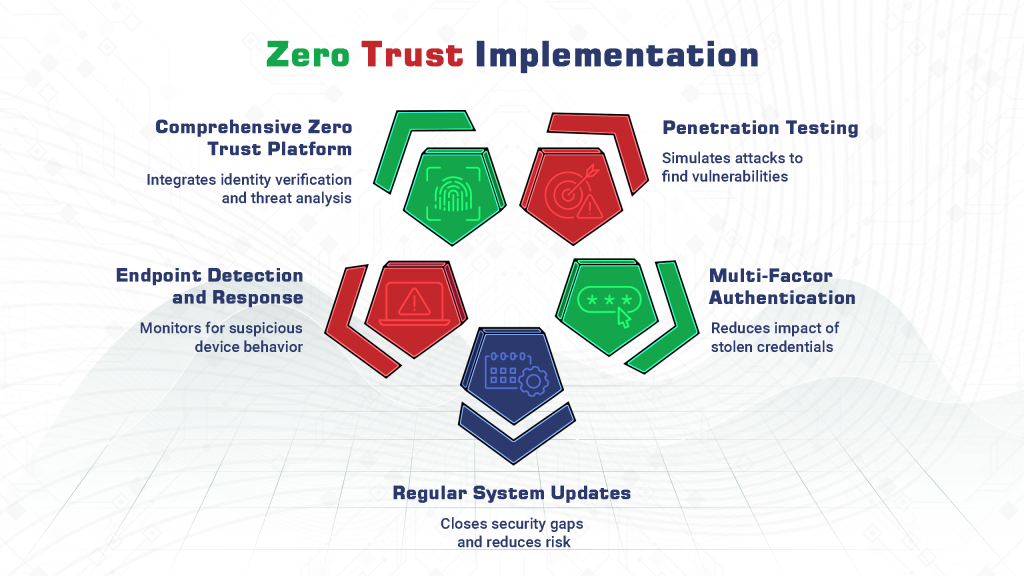
How to Implement Zero Trust to Kill Lateral Movement
- Identity Verification - Implement multi-factor authentication for all users
- Network Segmentation - Divide your network into secure zones
- Continuous Monitoring - Track and analyze all network activity in real-time
- Least Privilege Access - Grant only the minimum access needed for each role
- Endpoint Security - Secure every device connecting to your network
TripleCyber's Zero Trust Commitment
At TripleCyber, we take security beyond the perimeter. We prevent threats from moving inside the network by securing identities, isolating access zones, and continuously monitoring user behavior.
The question is no longer if attackers will get in. It's how far they'll get once they do. With Zero Trust, the answer is simple. They go no further.
Final Thoughts
With Zero Trust in place, attackers can't move laterally. Every attempt to pivot is blocked, logged, and flagged.
Lateral movement is what turns a small intrusion into a major breach. Zero Trust stops it from spreading.
Ready to implement Zero Trust?
Explore TripleEnable to secure your network today.
TripleCyber. TripleEnabling the Internet.


